Platform
Web
Role
Product Designer
Date
2021
PepsiCo runs its own supply chain: the same company makes the goods, stores them, and trucks them to the shops that sell them. I designed the tool meant to run that flow — warehouse manager, warehouse worker, delivery manager, one system. I was the solo designer on the bid; the commercial side was handled by others, and every flow and screen here is mine. The brief covered the existing process end to end, from manufacturing to retail. The result: the proposal won PepsiCo's tender. It was never built — and the design decisions are the part worth reading.
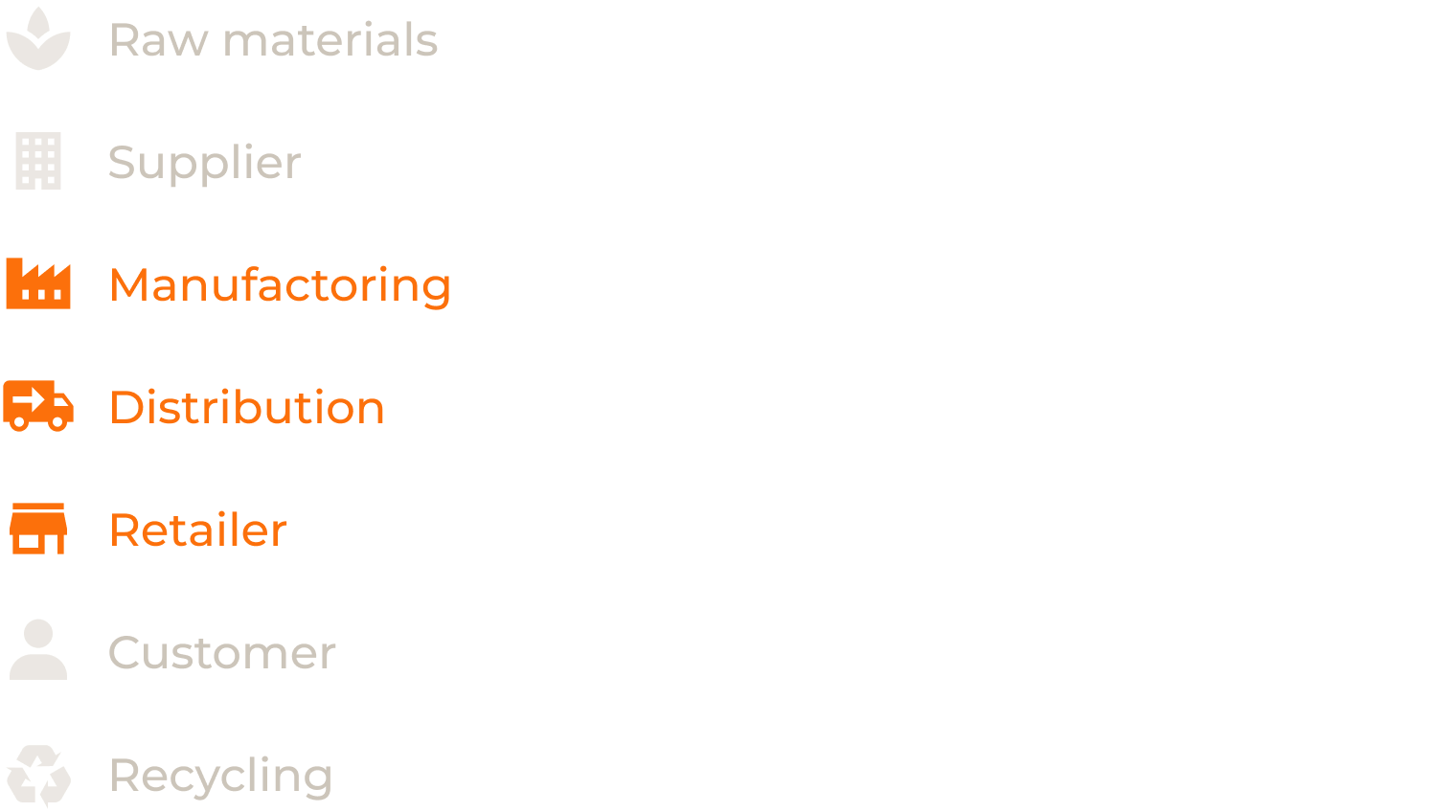
Manufacturing, distribution and retail were in scope; everything either side of them was somebody else's problem:
The tender package came with PepsiCo's own research: interviews the company had already run with its warehouse and delivery staff. I worked from those findings rather than from interviews of my own — and they were blunt. The floor ran on paper: whatever the existing software said, the operation followed printed lists and whiteboards. Any new tool had to beat paper, not the old system.
Dead zones: the building added a constraint of its own — inside the warehouse, connectivity drops between racks, and a tool that assumes a signal will stop working exactly where the work happens.
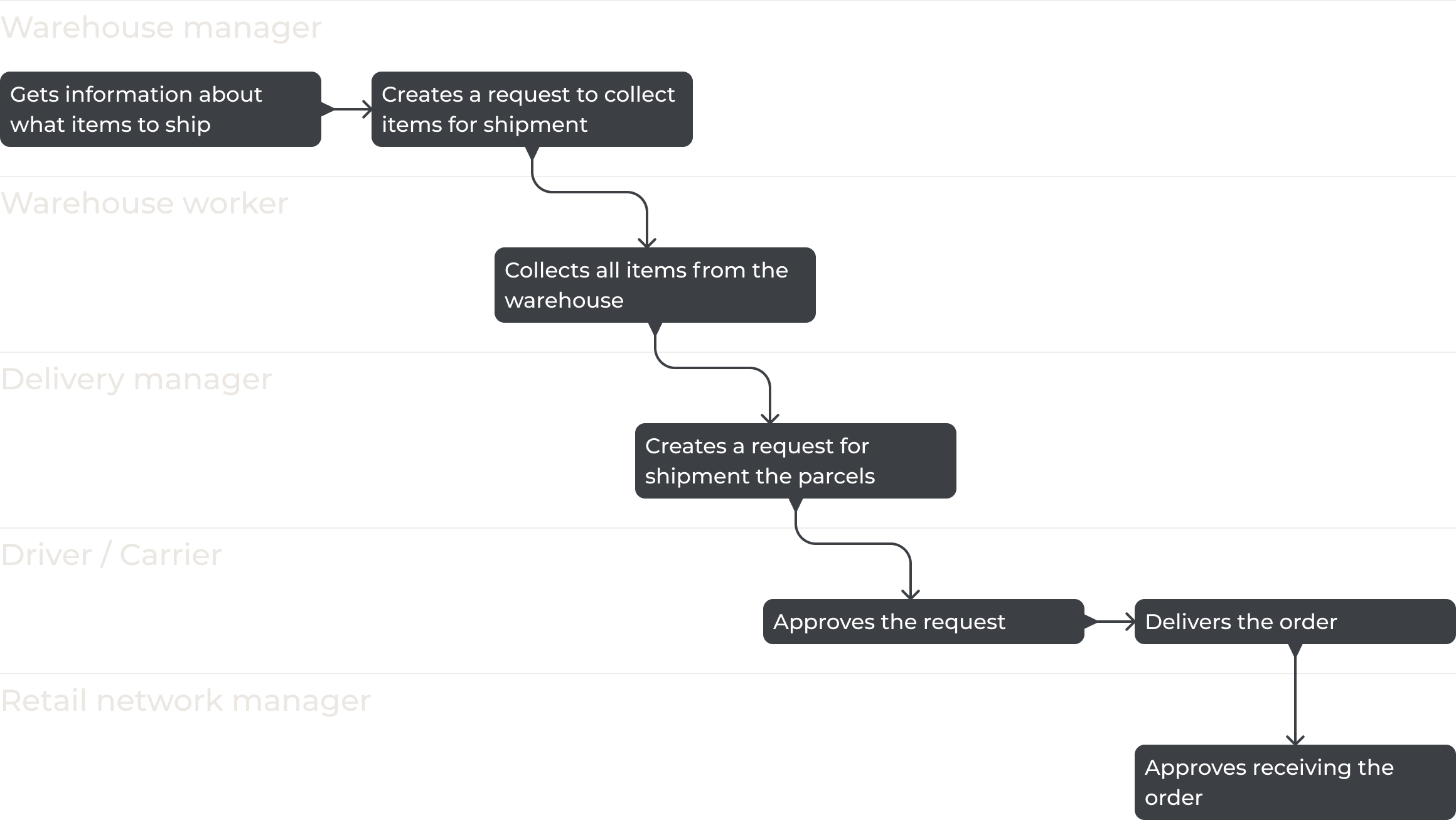
One order passed through five pairs of hands on its way to a shelf; three of them — warehouse manager, warehouse worker, delivery manager — were the ones the tool had to serve. The client's flow map traces the full chain:

An order here is a relay: the warehouse manager assembles it, the worker collects it, the delivery manager moves it. My first version started where B2B tools usually start — with the manager's dashboard. I reversed course once it was clear the floor worker's flow was the actual product: if collecting items isn't fast and sure, nothing the dashboards show is real.
The structural call followed: one app that switches what it shows by who signs in. What lost: purpose-built apps per role — the plausible default, and the expensive one. Each handoff between separate tools becomes a seam where orders stall, and the people sharing one physical flow end up with three systems to learn and keep in sync. Inside the shared app, how much each role sees of the others was a decision of its own: the delivery manager got a live status view of every order in motion — enough oversight to react without reaching into the floor's work.
The manager's board survived from that first dashboard-centric draft — now as one face of the shared app rather than its center.
The dead zones between racks weren't an edge case to patch later; they were the normal condition of the building. So the worker's flow is offline-first: the job downloads before the walk starts, every pick is confirmed locally, and the app reconciles once the signal returns. What lost: assumed connectivity — the cheaper build, and the one the building had already disqualified. A tool that fails between racks sends people straight back to printed lists.
Scanning became the spine of floor work — point at the code, confirm, move on. Browsing and tapping through lists lost: it reads fine in a meeting room and falls apart when your hands are full.
The worker's screen reduces the whole job to two actions — collect and confirm — designed to stay usable where coverage drops:
Won, never built: PepsiCo selected this proposal in the tender; implementation never followed — designed, chosen, not shipped.
The design cost something, too. The delivery manager's clarity was paid for by the warehouse worker: live oversight needs live data, and that meant extra confirmations and data entry for the person on the floor — the one with the least time to give it.
It is the same board the manager sees, opened into a different panel — the visibility the floor paid for: